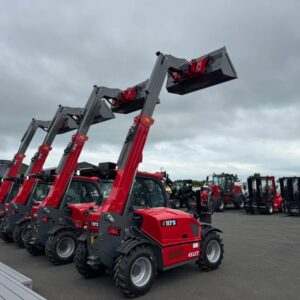
Learning how to operate and maintain an HPS 4512T starts with understanding the machine, its attachments and its lifting limits. This guide introduces practical ownership routines for the HPS 4512T Telehandler – New 2026 Model listed by Supreme Galaxy LDA.
Our product listing describes a 45 HP Yanmar Stage V diesel engine, a maximum lift height of 4 metres, a maximum lift capacity of 1,200 kg, four-wheel steering, auxiliary hydraulics and a Euro quick hitch. A bucket and pallet forks are listed as included equipment. Confirm the specification, serial number and attachment ratings for the actual machine at handover.
This article provides a general operating and care framework. An HPS 4512T operator’s manual and serial-specific service schedule have not been independently verified for this guide. The supplied manual, attachment instructions and matching load charts must determine starting procedures, control functions, operating limits, fluids and service intervals.
Quick navigation
- Handover and load charts
- Pre-use checks
- Starting and travelling
- Lifting and attachments
- Maintenance planning
1. Understand your HPS 4512T before first use
Arrange an equipment handover with an authorised, competent operator or technician. Locate the identification plate, emergency controls, parking brake, travel controls and attachment locking system. Ask for a demonstration of the fitted warning indicators and their prescribed checks.
Collect the operator’s manual, engine identification details, service record and attachment documentation. Make sure the load chart is readable and matches the machine and attachment. Similar model numbers from other brands do not establish that their manuals apply to this telehandler.
The advertised 1,200 kg maximum is not a capacity available at every height and reach. Extension, boom position, load centre and attachment configuration affect the permitted load. Check the relevant chart before each lift. Do not assume the advertised maximum capacity is available at the advertised maximum height.
The listing mentions a weigh-load indicator. Confirm exactly what the fitted device measures and which safety functions it provides. A displayed weight does not replace the load chart or guarantee stability. Never bypass a safety device or ignore its warnings.
2. Complete pre-use checks
Before starting, inspect the planned work area and travel route. Keep pedestrians separated from machine movements. Check ground firmness, edges, obstructions, overhead cables and clearances. Prepare a suitable lifting area and agree signals with a competent signaller when visibility requires one.
Walk around the stationary machine and check:
- Tyres and wheels for visible damage and the pressures required by the manual.
- Boom, forks, bucket, hitch and locking components for damage or abnormal wear.
- Hydraulic hoses and connections for leaks, rubbing or damage.
- Windows, mirrors, lights, seat belt and other visibility or restraint equipment.
- Fluid levels and cooling-system condition using the specified checking procedures.
Record the hour-meter reading and report defects. Complete the prescribed functional checks of brakes, steering, controls and warning systems before work. Remove the machine from use when a defect affects safety; a new model still needs daily checks.
3. Start and travel with care
- Enter using the designated steps and handholds. Adjust the seat and mirrors, and fasten the operator restraint.
- Set the parking brake and controls to the positions specified in the supplied manual.
- Follow the engine starting and preheat instructions. Check warning lights and instruments after starting.
- Allow the prescribed warm-up, then test movement and stopping in a clear area before carrying a load.
Do not guess joystick directions or steering-mode procedures. Learn them during handover and practise without a load. Change steering modes only under the conditions stated by the manufacturer.
For normal travel, keep the boom retracted and the load low in the prescribed travel position. Use a speed appropriate to visibility and ground conditions, with smooth braking and turning. Avoid travelling with a raised load. Check blind spots before moving or reversing, and stop if a signaller is no longer visible.
Follow the machine’s actual slope limits and travel instructions. Plan routes that avoid steep, slippery or unstable ground. Do not treat four-wheel steering as permission to turn sharply with a load or to work across a slope.
4. Handle loads and attachments correctly
Plan the lift before approaching the load. Establish its weight, centre of gravity, pickup method and destination. Verify that the attachment and load chart permit the task at the required reach. Keep people outside the movement and load zone.
With pallet forks, inspect the pallet and arrange the forks to support it correctly. Use the insertion and tilt procedures in the attachment instructions. Raise only enough to check that the load is stable before continuing the planned movement. Never allow anyone beneath a suspended load.
With a bucket, stay within the permitted machine and attachment limits. Material density changes load weight, so a bucket that is physically full may be too heavy. Avoid shock loading, dragging or using the boom for tasks outside its approved purpose.
For attachment changes, park securely and follow the hitch’s installation and locking sequence. Confirm engagement using the manufacturer’s specified check before lifting. Isolate auxiliary hydraulics and relieve pressure as instructed before connecting or disconnecting hoses. A Euro-style interface alone does not prove attachment compatibility.
Do not carry people on forks or in a bucket. Personnel lifting and suspended-load work require specifically approved equipment, procedures and competent planning; they are outside this introductory guide.
5. Maintain your HPS 4512T with a written plan
Create a service plan from the actual machine and engine manuals. Ask the supplying technician to identify initial service requirements and the hour-based or calendar-based limits. Do not copy oil-change intervals from another telehandler or from a Yanmar engine with a different model number.
| Area | Care to plan | Information to confirm |
|---|---|---|
| Diesel engine | Oil, filters, fuel system and coolant servicing | Engine model, approved fluids, capacities and intervals |
| Hydraulic system | Level checks, leak inspection and oil/filter replacement | Oil specification, pressure-isolation method and schedule |
| Boom and hitch | Inspection and prescribed lubrication | Grease points, lubricant and wear limits |
| Axles and transmission | Fluid servicing and inspection | Approved products and service requirements |
| Safety equipment | Functional checks and professional inspection | Test procedures and applicable inspection requirements |
Keep cooling screens and accessible areas clear of debris using approved cleaning methods. Protect electrical components, seals and intake openings when cleaning. Service air filters as directed rather than assuming paper elements can be washed.
Before maintenance, park on firm, level ground, lower the attachment safely, stop the engine and secure the machine against unexpected movement. Follow isolation instructions and release stored pressure as prescribed. Raised components need approved mechanical supports; hydraulic pressure alone is not a safe support.
Let hot parts cool before work. Never open a hot pressurised cooling system or use your hands to search for hydraulic leaks. Leave pressure-system repairs, structural work and safety-system adjustments to appropriately qualified personnel.
6. Record servicing and prepare for storage
Log the date, operating hours, defects, work completed and replacement parts. Keep professional inspection reports with the machine documents. Routine servicing and any legally required lifting-equipment examinations serve different purposes; arrange both as applicable where the machine operates.
For storage, clean the machine, park securely and follow its fuel, battery and corrosion-protection instructions. Before returning to work, repeat pre-use checks and resolve outstanding defects.
Ask about the HPS 4512T – New 2026 Model
Visit our HPS 4512T product page for equipment and delivery enquiries. Before purchase, request the serial-specific manual, matching load charts, confirmed attachment ratings and service arrangements.
For general telehandler principles, see the UK Health and Safety Executive’s telehandler guidance, agricultural telehandler guidance, operator training and safe-use guidance, lifting guidance and maintenance guidance. These are general resources, not an HPS manual; local requirements depend on the country of use.